I'm so lucky to have met Kay...a talented Stylist with an amazing blog called...Movie Star Makeover...Please check it out at http://moviestarmakeover.com/blog/ and leave a comment. She did an incredible job don't you think...

Magic Wand: The Maybelline Interview
Every single girl in my high school had a tube of Maybelline mascara. It was, to us, the ONLY mascara; plump with promise that your newly enhanced lashes could waft a date your way. There’s a powerful amount of witchcraft in that small magic wand.


When I put it down, I wanted to know MORE! So, being me, I contacted the author, Sharrie Williams (the grand-niece of Tom Lyle Williams, Maybelline’s inventor), and begged her to allow me an interview. And voila! She not only agreed, this dear lady went out of her way to offer me access to any images she could provide to (in her words), make my blog post “fabulous!”
I think you’ll agree that the peek into the world of cosmetics her loving memoir and this very generous interview provides is fascinating. PLUS, I hope you’ll all avail yourselves of an AMAZING offer on Amazon.com that only lasts until the end of the month (June 2012): to celebrate Gay Pride Month, this juicy read is selling for LESS than $2.00! Yes, you read that right. So, scamper over there, snag a few copies (they make GREAT gifts), then come back and read the interview. I’ll wait. Ready? Let’s go!
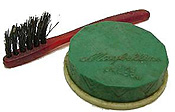
The little red box that could

K: Your book details so much about the hard work your great-uncle Tom Lyle did to link Maybelline with Hollywood. Let’s follow Maybelline’s timeline and see how Tom Lyle’s vision kept pace with American women and Hollywood’s changing cast of characters. Right after the Stock Market Crash of ’29, Maybelline ads featured a slinky vamp in white fox furs that encouraged women to “take these easy three steps to instant loveliness”…can you describe those steps? What are the modern equivalents for today’s vamps?
 S: Not much has changed as far as what makes a 1929 vamp or a 2012 hottie irresistible…It’s all in the eyes…. The three steps to instant loveliness was, and still is, Mascara, Eyebrow pencil (or powder) and Eyeshadow. It only takes a few minutes to change from a plain Jane into a Rock Star with Maybelline… a brand your great-grandmother, grandmother, mother and you still trust.
K: Maybelline was always innovative in so many ways, including knowing how to stay aware of social trends and what American women were craving. When society started frowning on the sultry look, Maybelline’s ad campaigns featured a more wholesome, more demure model with Main St. appeal. Tell us a bit more about the evolution of advertising looks used and the stars who were featured in them.

S: Yes, the flamboyance of the 1920′s ended and with it the vamp/flapper look. Maybelline gave the original Maybelline girl a new look, still demure, but now with a marcel wave.

K: You say that Tom Lyle believed that Maybelline’s gorgeous full color ads kept the “spark of glamour alive” during the dark days of the Depression. One of that era’s Maybelline models was Natalie Moorhead, a “statuesque, sophisticated comedian who wasn’t afraid to be her own woman.” Can you tell us anything about how he came to choose the models he did? Was it reputation of the actress, or was he going for a certain type of woman or style?

S: Both, of course. You see Maybelline was the only eye beauty enhancer on the market at this time and because of its flawless reputation received the Good Housekeeping Seal of Approval, thus he wanted models who emulated that kind of purity. Yet Maybelline also wanted to hold onto the glamour and sex appeal that women wanted as well. Jean Harlow was the blond bombshell of the early 1930′s and her characters did appeal to the hard-boiled working girl who wanted to make it in the world but in the end hoped for the rich man to save her. That was where the working girl of the 1930′s fit into society and Tom Lyle used that knowledge to bring her into the dimestores to buy Maybelline. He wanted every branch of society to come in and buy buy buy, so he played to every aspect of the female market. Natalie Moorhead had sophistication and sex appeal and that too was a now- kind of women emerging during the Great Depression.
 K: It seems to me that Tom Lyle (his stunning early profile is below) had a “vision” of the potential enhancement of the women he beautified before he even applied the makeup. Can you talk about that a bit?
S: Yes he was a genius when it came to beauty and perfection. He was almost too much of a perfectionist actually. Every photograph had to be flawless even if he had to retouch until he got what he was looking for. When he looked at anyone, male or female, he envisioned them at their full potential. It would excite him to realize what could be done with a little mascara, shadow and pencil. Even me at 5-6 years old became a subject of potential perfection. Do you remember reading about how my grandmother Evelyn made me up and paraded me in front of him so he could examine my eyes? He said, “You will someday be a beautiful women Sharrie.” He could see past my chubby cheeks and see my bone structure. That was the secret to real beauty–bone structure–as far as he and my grandmother were concerned.

K: Maybelline, Revlon, Max Factor, Helena Rubenstein, and Merle Norman were rivals in the 30’s and are all still in business today. What do you think has kept these companies alive when other cosmetics companies (like Lydia Pinkham) failed?

S: Maybelline never ever had a rival while Tom Lyle owned it. Even when he sold it in Dec of 1967 it owned 75% of the market share. However you must remember Maybelline in those days was strictly devoted to Eye Beauty. The other companies didn’t have a chance because Tom Lyle spent more money on advertising than all companies combined. He didn’t squander money like so many young companies do when they see a little profit. He was the most conservative man I never knew. That’s why Maybelline always survived the ups and downs of the economy. The other companies like Maybelline had quality products and of course spent money on advertising so survived. But even today Maybelline New York which now competes in all product areas has a tremendous advertising budget and it shows. Advertising is the secret to success. Today it’s Social Media but still the idea is the same. Reach the greatest amount of people possible and get your message out. Keep the quality and make it affordable to the average customer. Maybelline’s product was quality, yet sensibly priced.
K: In the mid-30s, when frumpiness receded and flirting was back in style, Maybelline partnered with Lilly Dache, the fascinating Parisian-born milliner famed for daring, darling hats. Please share what you know about that wonderful collaboration. LOVE Dache!
 IS: It was my grandmother Evelyn Williams who made Tom Lyle realize the potential of Eye Make-up combined with fashion was the modern direction for Maybelline, because young women were becoming fashion-conscious and more discerning than their mothers. Tom Lyle contacted Dache and collaborated on an ad campaign that worked out to be a win-win for them both. My grandmother was delighted to score a couple of beautiful Dache hats in the deal and I remember playing with them as a child. I have no idea what happened to them (there were terrible fires, you know).
K: One of the loves of Tom Lyle’s life was Alice Faye—what was the appeal of her particular look?
S: She was The All American Girl and Adorable. He liked that personally more than sex queens. But, Alice Faye had an issue with the studio and Betty Grable took the spotlight. Tom Lyle wanted to use Alice Faye’s image in Maybelline Ads, but when the studio announced “Down Argentine Way” and Betty Grable, this is the ad that came out.
 K: You quote Dorothy Lamour as saying “Glamour is just sex that got civilized,” and say that Tom Lyle would have agreed, since his “dream was that all women, maiden or matron, would discover glamour through Maybelline.” Can you tell us a bit more about Tom Lyle’s ideas of how an older woman could achieve glamour through makeup?
Older women shouldn’t rely on as much make-up as they did in their heyday youth. Subdued make-up, tastefully applied is much more attractive than trying to keep up with young girls. For my taste, having a good hair cut and color, soft make-up and simple jewelry is beauty as we age. Also the confidence we gain as mature women is sexy–don’t you think? When I walk into a room now, people still look at me, not for my make-up but the air of confidence I exude. It is ageless and powerful. (Editor’s note: We agree! See Sharrie’s publicity picture below.)
 K: Maybelline never forgot the youth market; they used contests and giveaways to attract “maidens.” Do you have any insider info on one such contest winner: Eleanor Fisher–“Miss Typical America”?

S: Eleanor Fisher won a small part in the film TRUE CONFESSION with Carole Lombard. She never went on to do much more!

K: How did Maybelline advertise during WWII? What is the idea of “patriotic beauty?”
S: In my book, I share how President Roosevelt was advised by the Pentagon that there must not be a “shortage” of glamour; that such a loss of beauty “might lower national morale.” So, the effect of pretty pin-up girls on the morale of the G.I.s was part of Maybelline’s ad campaigns of that era. It was a repeat of the idea of “Patriotism Through Beauty,” coined in 1917.
 K: Tell us a bit about what you learned of Joan Crawford and her dedication to looking her best at all times—she switched from Max Factor to Maybelline, during the 40s, right?
 S: Joan Crawford was Tom Lyle’s favorite model in the late 1940′s. She actually was Maybelline’s spokesperson until the 1960′s. She did do Max Factor ads up until she contracted with Maybelline and yes, she was fanatical about looking perfect. I don’t want to give the book away but, I will say, she had all her teeth pulled and had dentures made to make her smile perfect
.
K: I love that Maybelline recognized the need to appeal to different demographics with different spokesmodels—Crawford for the mature sophisticate, and 1947 Tournament of Roses Queen Norma Christopher for the youthful, all-American girl type. Please share some of Tom Lyle’s thinking on that subject.

S: Tom Lyle’s genius was to target all aspects of the female market, teenage to mature. He also knew when the trends were changing, especially in photography, going from super-glamorous to natural lighting. When Maybelline ads were seen on TV in the 1950′s, he went back to black and white ads because TV was in black and white. It was all based on impulse buying. He knew the psyche of the female mind and what they wanted.
K: In the 50s, Maybelline used a stunning exotic ad campaign model—how did they feel this cool beauty would appeal to the new television audiences?

S: After WWII, the Asian market was ripe for marketing. As you know their car industry grew bigger than our own after the war because America began allowing importing as well as exporting to foreign countries. Tom Lyle capitalized on this…and the fact that Grace Kelly was the cool blonde in films and the bouncy All American girl image didn’t have as much international appeal in the grand scheme.

K: 1950s TV beauty queens like Loretta Young and Lucille Ball introduced the concept of Hollywood glamour to “everyday housewives”…how did that impact Maybelline?
S: The 1950′s brought in Dior fashion, The Loretta Young Show, and of course, “ I Love Lucy”. This killer combination created a ripe market for Maybelline to explode with the cultural need for glamour even in the kitchen. Remember Leave it to Beaver’s Mrs Cleaver and how she wore pearls and heels while making dinner? Or Mrs. Nelson dressed to the teeth when Ricky came home from school? Well most likely they were wearing Maybelline, because Maybelline was the most advertised and the most sensibly priced. Maybelline was everywhere internationally and the # 1 eye beauty product in America, bar none.
 K: Rebellious 50s gals wanted heavy makeup, society women and housewives wanted to look like Grace Kelly—how did Maybelline cater to both segments?

S: From the beginning in 1915 when Maybelline was first called Lash-Brow-Ine, Tom Lyle catered to whatever segment of society that was willing to make up their eyes. By the 1950′s, every teenage girl could afford to buy mascara, pencil and shadow for a couple of dollars, for the money she earned for a night of babysitting. That was the trick, making Maybelline affordable to everyone. That’s why Maybelline is still # 1 all over the world today. Incredible advertising and reasonable priced product. The ads targeted both markets and included print and TV ads–to see a charming early TV ad; click here.
K.You tell a darling story about how you discovered the power of makeup…can you tell us here what happened when your grandmother did a makeover on you at 5 years old? What’s your most vivid memory of that?
S: I hope people will buy the book and read the whole story but in a nutshell, my grandmother Evelyn, took me into the bathroom at Tom Lyle’s home with all the Hollywood lights around the mirror and transformed me into a diva right before my eyes. Tom Lyle wanted to see his mascara on a child’s eyelashes and said when he looked at me, “There’s nothing like Maybelline on virgin eyelashes.” (Meaning eyelashes that had never been mascaraed.)
K: How do you feel about the importance of women to feel beautiful? What’s your heritage about women, makeup, and beauty? Do you think your Nana’s philosophy is true: Beauty hurts?
S: Nana always said “Beauty hurts” when I complained about anything. In my family, looking as beautiful as possible was very important, especially around Nana, who was old-school about it. I even made up to go to the beach in the 1960′s and my hair was camera-ready. Nana was so obsessed with beauty and perfection it finally killed her. After her death I came out of the spell and began to search inside myself for the real Sharrie. It took years of 12-step programs to finally accept myself, warts and all. Now when you meet me, you see and feel a real person who feels good about herself, not a mannequin who wants to keep you at a distance and feel lonely and isolated inside.
K: As you looked back and researched to write this fascinating book, what did you learn about women and beauty?

S: Beauty is inner confidence. It’s like Maybelline New York says today: “Maybe it’s Maybelline.” To me that means, maybe that beautiful glow is her healthy Spirit, but it could be her Maybelline as well. I used to be like my great-uncle Tom Lyle and my grandmother Evelyn, meaning when I met a person, all I could see is how they could look if they did this or that to themselves: a little nose job, an eye lift, a face lift, the perfect haircut, lose some weight, get your brows waxed, etc. Now I am able to see the beauty of a person’s Spirit and that is true beauty. We are all beautiful, but society has brainwashed us to think we don’t deserve love and respect unless we are perfect model material. Very sad to grow up feeling inferior just because we are told we are. Even in relationships, we allow others to make us feel bad because we can’t live up to their expectations of what they think they deserve to have, based on perfection, air-brushed ads and ultra-thin models. It’s all a lie, but the society is now too sick to get it. That’s how I see it, now that I have lived it all my life. I now have confidence based on being authentic, not cocky or arrogant but real and present.
K: Tom Lyle believed that “no matter how bleak the economic outlook, women would never lose their desire for beauty and sex appeal, and would always pay for an affordable cosmetic product of good quality.” Do you believe that’s true? We’re in a pretty serious recession right now, but the cosmetics and fashion industries seem to be doing well.
S: I absolutely believe women will still spend their last dime on products that make them look good. The Cosmetic industry is thriving as other industries are dying out. It’s crazy, but what Tom Lyle started in 1915 is still being sold every 1.3 seconds somewhere around the world.

Many, many thanks to Sharrie Williams for taking the time and effort to discuss her intriguing heritage and share so much with us. Please buy her book and visit her picture-and-information-filled site to learn more: http://www.maybellinebook.com/
Magic Wand: The Maybelline Interview
Every single girl in my high school had a tube of Maybelline mascara. It was, to us, the ONLY mascara; plump with promise that your newly enhanced lashes could waft a date your way. There’s a powerful amount of witchcraft in that small magic wand.
When I discovered there was a tell-all memoir about the family dynasty responsible for Maybelline, I dropped everything and read it cover to cover. It’s a compelling page-turner for anyone who loves make-up, Hollywood history, rip-snorting family drama, passionate love stories, and redemption.

When I put it down, I wanted to know MORE! So, being me, I contacted the author, Sharrie Williams (the grand-niece of Tom Lyle Williams, Maybelline’s inventor), and begged her to allow me an interview. And voila! She not only agreed, this dear lady went out of her way to offer me access to any images she could provide to (in her words), make my blog post “fabulous!”
I think you’ll agree that the peek into the world of cosmetics her loving memoir and this very generous interview provides is fascinating. PLUS, I hope you’ll all avail yourselves of an AMAZING offer on Amazon.com that only lasts until the end of the month (June 2012): to celebrate Gay Pride Month, this juicy read is selling for LESS than $2.00! Yes, you read that right. So, scamper over there, snag a few copies (they make GREAT gifts), then come back and read the interview. I’ll wait. Ready? Let’s go!
The little red box that could
K: Your book details so much about the hard work your great-uncle Tom Lyle did to link Maybelline with Hollywood. Let’s follow Maybelline’s timeline and see how Tom Lyle’s vision kept pace with American women and Hollywood’s changing cast of characters. Right after the Stock Market Crash of ’29, Maybelline ads featured a slinky vamp in white fox furs that encouraged women to “take these easy three steps to instant loveliness”…can you describe those steps? What are the modern equivalents for today’s vamps?

K: Maybelline was always innovative in so many ways, including knowing how to stay aware of social trends and what American women were craving. When society started frowning on the sultry look, Maybelline’s ad campaigns featured a more wholesome, more demure model with Main St. appeal. Tell us a bit more about the evolution of advertising looks used and the stars who were featured in them.

K: You say that Tom Lyle believed that Maybelline’s gorgeous full color ads kept the “spark of glamour alive” during the dark days of the Depression. One of that era’s Maybelline models was Natalie Moorhead, a “statuesque, sophisticated comedian who wasn’t afraid to be her own woman.” Can you tell us anything about how he came to choose the models he did? Was it reputation of the actress, or was he going for a certain type of woman or style?
S: Both, of course. You see Maybelline was the only eye beauty enhancer on the market at this time and because of its flawless reputation received the Good Housekeeping Seal of Approval, thus he wanted models who emulated that kind of purity. Yet Maybelline also wanted to hold onto the glamour and sex appeal that women wanted as well. Jean Harlow was the blond bombshell of the early 1930′s and her characters did appeal to the hard-boiled working girl who wanted to make it in the world but in the end hoped for the rich man to save her. That was where the working girl of the 1930′s fit into society and Tom Lyle used that knowledge to bring her into the dimestores to buy Maybelline. He wanted every branch of society to come in and buy buy buy, so he played to every aspect of the female market. Natalie Moorhead had sophistication and sex appeal and that too was a now- kind of women emerging during the Great Depression.

S: Yes he was a genius when it came to beauty and perfection. He was almost too much of a perfectionist actually. Every photograph had to be flawless even if he had to retouch until he got what he was looking for. When he looked at anyone, male or female, he envisioned them at their full potential. It would excite him to realize what could be done with a little mascara, shadow and pencil. Even me at 5-6 years old became a subject of potential perfection. Do you remember reading about how my grandmother Evelyn made me up and paraded me in front of him so he could examine my eyes? He said, “You will someday be a beautiful women Sharrie.” He could see past my chubby cheeks and see my bone structure. That was the secret to real beauty–bone structure–as far as he and my grandmother were concerned.
K: Maybelline, Revlon, Max Factor, Helena Rubenstein, and Merle Norman were rivals in the 30’s and are all still in business today. What do you think has kept these companies alive when other cosmetics companies (like Lydia Pinkham) failed?
S: Maybelline never ever had a rival while Tom Lyle owned it. Even when he sold it in Dec of 1967 it owned 75% of the market share. However you must remember Maybelline in those days was strictly devoted to Eye Beauty. The other companies didn’t have a chance because Tom Lyle spent more money on advertising than all companies combined. He didn’t squander money like so many young companies do when they see a little profit. He was the most conservative man I never knew. That’s why Maybelline always survived the ups and downs of the economy. The other companies like Maybelline had quality products and of course spent money on advertising so survived. But even today Maybelline New York which now competes in all product areas has a tremendous advertising budget and it shows. Advertising is the secret to success. Today it’s Social Media but still the idea is the same. Reach the greatest amount of people possible and get your message out. Keep the quality and make it affordable to the average customer. Maybelline’s product was quality, yet sensibly priced.
K: In the mid-30s, when frumpiness receded and flirting was back in style, Maybelline partnered with Lilly Dache, the fascinating Parisian-born milliner famed for daring, darling hats. Please share what you know about that wonderful collaboration. LOVE Dache!

K: One of the loves of Tom Lyle’s life was Alice Faye—what was the appeal of her particular look?
S: She was The All American Girl and Adorable. He liked that personally more than sex queens. But, Alice Faye had an issue with the studio and Betty Grable took the spotlight. Tom Lyle wanted to use Alice Faye’s image in Maybelline Ads, but when the studio announced “Down Argentine Way” and Betty Grable, this is the ad that came out.

S: Here’s a portrait of “Dottie” Dorothy Lamour, signed for my great-uncle. My father remembers going with his uncle Tom Lyle Williams to her home to sign a Maybelline contract. 
Older women shouldn’t rely on as much make-up as they did in their heyday youth. Subdued make-up, tastefully applied is much more attractive than trying to keep up with young girls. For my taste, having a good hair cut and color, soft make-up and simple jewelry is beauty as we age. Also the confidence we gain as mature women is sexy–don’t you think? When I walk into a room now, people still look at me, not for my make-up but the air of confidence I exude. It is ageless and powerful. (Editor’s note: We agree! See Sharrie’s publicity picture below.)

S: Eleanor Fisher won a small part in the film TRUE CONFESSION with Carole Lombard. She never went on to do much more!
K: How did Maybelline advertise during WWII? What is the idea of “patriotic beauty?”
S: In my book, I share how President Roosevelt was advised by the Pentagon that there must not be a “shortage” of glamour; that such a loss of beauty “might lower national morale.” So, the effect of pretty pin-up girls on the morale of the G.I.s was part of Maybelline’s ad campaigns of that era. It was a repeat of the idea of “Patriotism Through Beauty,” coined in 1917.

.
K: I love that Maybelline recognized the need to appeal to different demographics with different spokesmodels—Crawford for the mature sophisticate, and 1947 Tournament of Roses Queen Norma Christopher for the youthful, all-American girl type. Please share some of Tom Lyle’s thinking on that subject.
S: Tom Lyle’s genius was to target all aspects of the female market, teenage to mature. He also knew when the trends were changing, especially in photography, going from super-glamorous to natural lighting. When Maybelline ads were seen on TV in the 1950′s, he went back to black and white ads because TV was in black and white. It was all based on impulse buying. He knew the psyche of the female mind and what they wanted.
K: In the 50s, Maybelline used a stunning exotic ad campaign model—how did they feel this cool beauty would appeal to the new television audiences?
S: After WWII, the Asian market was ripe for marketing. As you know their car industry grew bigger than our own after the war because America began allowing importing as well as exporting to foreign countries. Tom Lyle capitalized on this…and the fact that Grace Kelly was the cool blonde in films and the bouncy All American girl image didn’t have as much international appeal in the grand scheme.
K: 1950s TV beauty queens like Loretta Young and Lucille Ball introduced the concept of Hollywood glamour to “everyday housewives”…how did that impact Maybelline?
S: The 1950′s brought in Dior fashion, The Loretta Young Show, and of course, “ I Love Lucy”. This killer combination created a ripe market for Maybelline to explode with the cultural need for glamour even in the kitchen. Remember Leave it to Beaver’s Mrs Cleaver and how she wore pearls and heels while making dinner? Or Mrs. Nelson dressed to the teeth when Ricky came home from school? Well most likely they were wearing Maybelline, because Maybelline was the most advertised and the most sensibly priced. Maybelline was everywhere internationally and the # 1 eye beauty product in America, bar none.

S: From the beginning in 1915 when Maybelline was first called Lash-Brow-Ine, Tom Lyle catered to whatever segment of society that was willing to make up their eyes. By the 1950′s, every teenage girl could afford to buy mascara, pencil and shadow for a couple of dollars, for the money she earned for a night of babysitting. That was the trick, making Maybelline affordable to everyone. That’s why Maybelline is still # 1 all over the world today. Incredible advertising and reasonable priced product. The ads targeted both markets and included print and TV ads–to see a charming early TV ad; click here.

K.You tell a darling story about how you discovered the power of makeup…can you tell us here what happened when your grandmother did a makeover on you at 5 years old? What’s your most vivid memory of that?
S: I hope people will buy the book and read the whole story but in a nutshell, my grandmother Evelyn, took me into the bathroom at Tom Lyle’s home with all the Hollywood lights around the mirror and transformed me into a diva right before my eyes. Tom Lyle wanted to see his mascara on a child’s eyelashes and said when he looked at me, “There’s nothing like Maybelline on virgin eyelashes.” (Meaning eyelashes that had never been mascaraed.)
K: How do you feel about the importance of women to feel beautiful? What’s your heritage about women, makeup, and beauty? Do you think your Nana’s philosophy is true: Beauty hurts?
S: Nana always said “Beauty hurts” when I complained about anything. In my family, looking as beautiful as possible was very important, especially around Nana, who was old-school about it. I even made up to go to the beach in the 1960′s and my hair was camera-ready. Nana was so obsessed with beauty and perfection it finally killed her. After her death I came out of the spell and began to search inside myself for the real Sharrie. It took years of 12-step programs to finally accept myself, warts and all. Now when you meet me, you see and feel a real person who feels good about herself, not a mannequin who wants to keep you at a distance and feel lonely and isolated inside.
K: As you looked back and researched to write this fascinating book, what did you learn about women and beauty?
S: Beauty is inner confidence. It’s like Maybelline New York says today: “Maybe it’s Maybelline.” To me that means, maybe that beautiful glow is her healthy Spirit, but it could be her Maybelline as well. I used to be like my great-uncle Tom Lyle and my grandmother Evelyn, meaning when I met a person, all I could see is how they could look if they did this or that to themselves: a little nose job, an eye lift, a face lift, the perfect haircut, lose some weight, get your brows waxed, etc. Now I am able to see the beauty of a person’s Spirit and that is true beauty. We are all beautiful, but society has brainwashed us to think we don’t deserve love and respect unless we are perfect model material. Very sad to grow up feeling inferior just because we are told we are. Even in relationships, we allow others to make us feel bad because we can’t live up to their expectations of what they think they deserve to have, based on perfection, air-brushed ads and ultra-thin models. It’s all a lie, but the society is now too sick to get it. That’s how I see it, now that I have lived it all my life. I now have confidence based on being authentic, not cocky or arrogant but real and present.
K: Tom Lyle believed that “no matter how bleak the economic outlook, women would never lose their desire for beauty and sex appeal, and would always pay for an affordable cosmetic product of good quality.” Do you believe that’s true? We’re in a pretty serious recession right now, but the cosmetics and fashion industries seem to be doing well.
S: I absolutely believe women will still spend their last dime on products that make them look good. The Cosmetic industry is thriving as other industries are dying out. It’s crazy, but what Tom Lyle started in 1915 is still being sold every 1.3 seconds somewhere around the world.
Many, many thanks to Sharrie Williams for taking the time and effort to discuss her intriguing heritage and share so much with us. Please buy her book and visit her picture-and-information-filled site to learn more: http://www.maybellinebook.com/